



All posts by Marc Klaas

I am President of the KlaasKids Foundation and BeyondMissing, Inc. Both organizations are 501(c)(3) public benefit non profit organizations.

Proposition 35: Dragging Megan’s Law into the 21st Century

Megan’s Law namesake Megan Kanka

One benefit of Proposition 35 that has received little attention is the mandate to bridge Megan’s Law into the 21st Century. Together we can create a safer California by requiring all registered sex offenders to include Internet identifiers as a component of the registration process.


Sex offender registration and community notification, otherwise known as Megan’s Law, was adopted by all 50-states and the Federal government in the mid 1990’s. Megan’s Law is based on the premise that, because of their propensity to reoffend, convicted sex offenders pose a threat to society. Therefore, the public benefits by knowing where they live in the community.


The Internet was not the ubiquitous presence that it is today when Megan’s Law was enacted, so email addresses, IM handles and other Internet identifiers were not included as a component of the registration process. Prop 35 changes that by requiring registered sex offenders to provide email addresses, social networking profiles and other online identifiers so that social networking sites can scour relevant profiles from their online communities.


The concept of convicted sex offenders including their Internet identifiers as a component of the sex offender registration process is not new. It was successfully legislated in New York in 2008 and has thus far been responsible for removing more than 24,000 sex offender profiles from social networking sites like Facebook and MySpace.


Eighty-two percent of California’s 98,569 registered sex offenders are compliant. This means that they obey the terms of the law, disclose the personal, identifying, employment and other information that is required by the sex offender registration process. There is every reason to believe that once Prop 35 becomes law they will also include their Internet identifiers.


Since the California State Legislature has demonstrated an unwillingness to take these reasonable steps to protect kids who go online, Prop 35 will enable government to use this administrative procedure to stop sexual predators from using the Internet to prey on innocent children. By voting for Prop 35 California’s citizens can take control of our own future.


Proposition 35 will protect California’s children by increasing penalties against human traffickers and online predators, requiring convicted sex traffickers to register as sex offenders, requiring all registered sex offenders to provide authorities with information about their internet accounts, and using the fines against convicted traffickers to pay for victim services.


The days of allowing human traffickers and cyber-perverts to use the Internet to troll for innocent children can end now. So, join me, a huge bi-partisan coalition of elected officials, law enforcement agencies and fraternal organizations representing more than 90,000 sworn law enforcement personnel, and virtually every victim’s rights organization in California and vote YES on Proposition 35 when you step into the voting booth next Tuesday.

The Michelle Le Murder Trial: Justice Delayed

The Michelle Le murder trial jury has been deliberating for a week. They must decide if Michelle’s killer Giselle Esteban is guilty of first degree murder or the lesser crime of manslaughter. The prosecution presented compelling evidence that the killer believed that Michelle was responsible for everything that was wrong with her life, planned Michelle’s murder and killed her in cold blood on the evening of May 17, 2011. The defense countered that Giselle Esteban snapped in a moment of passion, and that the result was Michelle’s untimely death.


I attended many trial sessions in support of Michelle’s friends and family. The body of evidence was overwhelming. There were hundreds of pages of text message transcripts, surveillance video and photo images, cell phone tower analysis, physical evidence, DNA evidence, and interview transcripts. In total they painted a chilling image of an obsessive and demanding young woman who had completely alienated family and friends. She had lost custody of her own daughter and was only able to visit through supervised visitations. A restraining order prohibited her from contact with the father of her child.


The defense dismissed the killer’s slanderous and unfounded accusations leading up to Michelle’s death. Instead they attempted to portray the killer as a loving mother whose family was torn asunder by promiscuity and the deceit of others. It was character assassination as defense. Michelle is dead, so she could not refute the charges. Her family, aghast and appalled by the litany of lies spewing forth from the defense could only sit stoically and absorb the psychological punches until the jury returned with the only conceivable verdict.


It has been a week. Michelle’s family, who has displayed such grace and dignity throughout sits twisting in the wind as the jury deliberates. They wonder what is taking so long. Was the jury attending the same trial and listening to the same body of evidence? If they base their decision upon the evidence presented in court can they come to any conclusion but the obvious?


I read the transcript of the initial interview between Hayward Police Inspector Fraser Ritchie and the suspect. It was conducted about 30-hours after Michelle disappeared. The suspect fingers herself as the last person to see Michelle. She says that it was a coincidence. Although she recounts distant events in detail, she doesn’t remember if she approached Michelle, if they spoke, if they argued, or if she entered Michelle’s car. The transcript presents a chilling window into the mind of a killer, as does the audio recording of the interview which includes the inappropriate and chilling laughter of a remorseless killer.


I don’t know what the jury is going to do, but at this point I am very concerned. I would prefer to see a hung jury rather than a lesser conviction. We all know that Giselle Esteban killed Michelle Le. It was thought out, telegraphed via text message over time, and executed in cold blood. The evidence is overwhelming. Anything less than a verdict of murder in the first degree will constitute a travesty of justice.

Death Penalty Case Study: Spencer Brasure

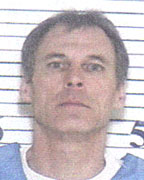
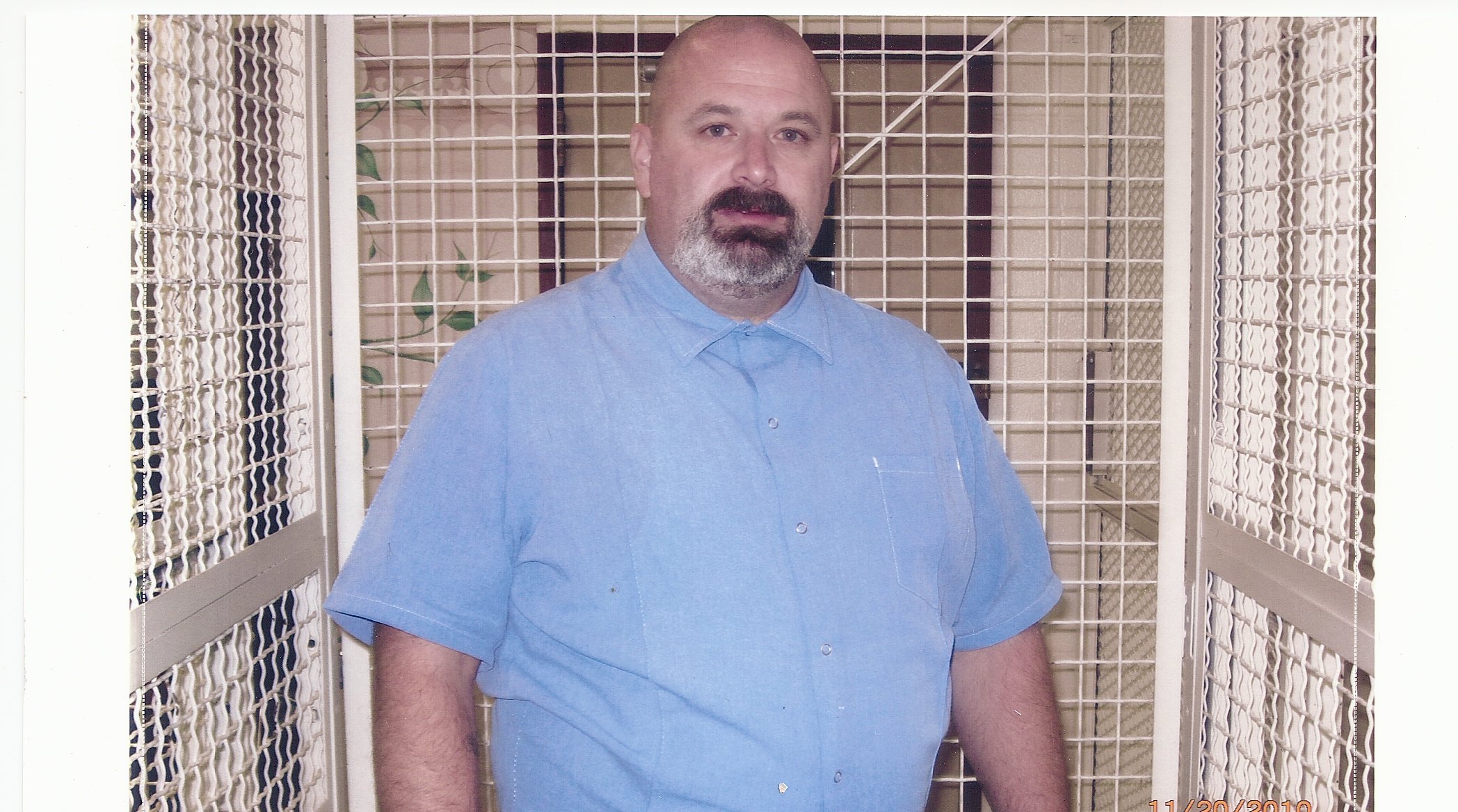
Torture Killer Spencer Rawlin Brasure

As California voters decide whether to side with the ACLU and other liberal special interests to get rid of the death penalty, the No on 34 campaign continues its profiles of the “worst of the worst” convicted murderers on death row. Here is another killer who would be spared if Proposition 34 passes in November.


In August 1998, Spencer Rawlin Brasure was convicted and sentenced to death for brutally torturing and killing a Redondo Beach man on Sept. 7, 1996. Brasure and his accomplice kidnapped 20-year-old Anthony Guest, tied him up, burned him with a propane torch, stapled wood to his head, forced him to eat broken glass, and shocked him repeatedly with a cattle prod before setting him on fire and leaving him to die in a remote Ventura County campsite near Gorman.


The coroner’s office testified that it took the victim several hours to die in agony. The judge described the murder as “savage, barbarous, merciless and cruel.”  Evidence at trial also showed that Brasure had tried to have several witnesses in the case killed.


While sitting on death row at San Quentin State Prison, Brasure has found time to campaign against the death penalty. In 2011, he wrote a blog from prison complaining that he is a victim of a “political agenda”.

Realignment Continues to Drive up Crime in California (Part 1)

Perceptions of crime are changing in California. The very real threats that we experienced leading up to the mid 1990’s have been replaced by complacency in the early 2010’s. Society seems to have forgotten that the threat of crime diminishes our social structure, creates fear in our neighborhoods, leaves victims of property crimes feeling vulnerable and victims of violence broken or dead. That, and concerns about runaway budgets, financial mismanagement, and the role of government have created a climate in which our elected leaders believe, and people support, the notion that it is better to release criminals back into society rather than the build the prisons necessary to house convicted criminals.


On November 6, California voters will choose whether or not to modify California’s Three-Strikes-and-You’re Out law when we vote on Proposition 36. Thousands of three-strike prisoners, individuals who have at least two prior serious or violent felony convictions on their rap-sheet may be eligible for re-sentencing hearings that can put them back onto our streets.


If passed in November, Proposition 34 will retroactively overturn California’s death penalty in favor of a sentence of life without the possibility of parole (LWOP). Prop 34 proponents say that this will guarantee, among other things, that remorseless baby killers, cop killers, serial killers, and mass murderers will die in prison. What they fail to mention is that on September 30, Governor Brown signed Senate Bill 9, which can overturn LWOP sentences for 309 remorseless killers currently housed in our prison system.


October represents the one-year anniversary of Assembly Bill 109, Governor Brown’s Prison Realignment Program. Realignment is supposedly the most benign of the measures being promoted in the current trend towards prison reform, because under Realignment, inmates who are classified as non-serious, non-violent, and non-sexual offenders are sent to local jails instead of California state prisons or put under community supervision. However, these Post-Release Community Supervision inmates (PRCS) could have prior convictions for murder or sexual offenses as long as their most recent conviction was for a non-serious, non-violent, and non-sexual crime.


The Sacramento-based Criminal Justice Legal Foundation has been tracking the impact of Governor Brown’s Realignment Law (AB109) since it took effect in October 2011. Here are some of their findings.


According to the minutes of a recent Los Angeles county meeting on Realignment, “Thus far, over 7000 inmates released. 4227 (about half of those released) have been screened. Of the 4227, 2692 showed at the assessment center for a full AOD assessment (63.6%). Of those assessed, 1176 (43.7%) were referred to treatment and of those 545 (46.3%) have shown to treatment. So, looking at the overall numbers, of the more than 7000 released, 545 have entered treatment for AOD (less than 8%).” This means that less than half of the offenders referred to programs are even showing up.


LAPD Sgt. Jeff Nuttall states, “Some of the people who are on this program are absolutely dangerous career criminals.”


In San Francisco, there are 306 inmates who were released under PRCS. On average, each of them has been previously convicted of eight felonies, and more than half convicted of violent, sexual, or weapons-related offenses. San Francisco Adult Probation Chief Stills said, “the population is high-risk with high needs.”


In fact, one prisoner who was segregated in a secure housing unit in Pelican Bay, where the state’s worst criminals are incarcerated, was put on probation through California’s Realignment.


Carl Landry, a San Bernardino Probation Department supervisor, said that there is an increased number of high-level or leading gang members which have been released as a result of AB109.


In Lancaster, more than 300 offenders were released under partial supervision to Los Angeles probation officers since Realignment began. Nearly 200 of these offenders have been rearrested for new crimes or charges.


From October 2011 to July 2012, 3054 offenders were released into PRCS in San Bernardino. Of that number, 606 of them have been rearrested for new offenses, consisting of 489 felonies and 117 misdemeanors. Another 5 percent were re-incarcerated for technical probation violations.


Hesperia Capt. Steve Higgins said, “Of the 88 burglaries committed since 2011,…49 of them were committed by four people — two of whom were PRCS probationers. And of those 49, he said nearly 30 burglaries can be linked back to one PRCS probationer.”


Sex Offender Scott Herman

Scott Herman, a sex offender from Santa Rosa, violated the terms of his parole within two weeks of being released under AB109. He was found by his parole officer following young girls around and behaving suggestively in a Walmart. He has been convicted of indecent exposure and molesting children six times (including parole violations) since 1996. Rather than serving his full one-year sentence in a California prison, he served only two and a half months in the Sonoma County Jail.

Death Penalty Case Study: John Ghobrial

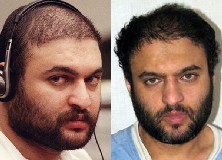
Child Killer John Ghobrial

As California voters decide whether to side with the ACLU and other liberal special interests to get rid of the death penalty, the No on 34 campaign continues its profiles of the “worst of the worst” convicted murderers on death row. Here is another killer who would be spared if Proposition 34 passes in November.


John Ghobrial lured 12-year-old Juan Delgado, a La Habra sixth grade student, to his death in 1998. After befriending the boy, he killed him in a backyard shed, then tried to cover up the crime by dismembering the body with a meat cleaver. He then encased the body parts in blocks of concrete that were scattered about the neighborhood. The shed was later found to contain pornographic magazines along with bags of cement.


Ghobrial was accused of molesting a relative before emigrating from Egypt. He was convicted and sentenced to the death penalty in 2002.


Words Left Unspoken

Professor Lawrence C. Marshall

On Sunday afternoon, October 14, I participated in a public forum at Santa Rosa’s Shomrei Torah Synagogue. The focus was on two propositions that will appear on California’s November ballot. Proposition 34, if passed, will replace California’s death penalty with a sentence of life without the possibility of parole. Proposition 36 would amend the Three Strikes and You’re Out law by requiring that the third strike is a serious or violent felony.


I was invited to support No on Prop 36, as I believe that the Three Strikes and You’re Out law should not be amended. Defense attorney and ACLU of Northern California board member Steve Fabian represented Yes on Prop 36. Kent Scheidegger, Legal Director of the Criminal Justice Legal Foundation argued against Prop 34. The argument to overturn the death penalty was represented by Stanford University Professor and legal clinic Director Lawrence C. Marshall. Congregation Shomrei Torah Rabbi George Gittleman concluded the program with reflections on the death penalty in Judaism.


Overall it was an educational and informative forum that was well attended by an enthusiastic audience. However, the incident that stood out the most was not witnessed by the audience as it occurred after the forum was concluded.


Throughout the years I have witnessed numerous interactions between crime victims and those who advocate on behalf of death row inmates. These criminal apologists make impassioned, and often times very compelling arguments on behalf of remorseless killers or other serious and violent criminals; yet they fail to look me in the eye, rarely shake my hand and never reference the circumstances that have brought me to the podium.


Proposition 36 was presented first. Mr. Fabian made his case for ten minutes and then I made mine. We were each given a five minute rebuttal and then took questions from the audience. Both sides were given equal weight and I hope that I changed some minds toward my position.


The same format was followed by the Prop 34 discussion. In his opening statement, with obvious emotion and in the throes of passion Professor Marshall said that life sentences give society “every bit of protection” it could ask for without risking “the cost of executing innocent people.”  This despite the fact that Governor Brown just signed Senate Bill 9, which can overturn prison sentences of life without parole for 309 convicted killers. He also seems unaware that Governor Brown, a death penalty opponent, recently said that, “There are no innocent inmates on California’s death row”. At one point in his opening, Professor Marshall even referenced my commentary that, “You can’t blame 3-strikes for racial disparities, because they exist throughout the criminal justice system.”


I don’t want to minimize Mr. Scheidegger’s opposition to Prop 34 because it was eloquent, strong, and based upon facts, but this about things that weren’t said, not things that were said.


During his rebuttal Professor Marshall made an impassioned plea for death row inmates when he said, “They are us, they’re our children. We are a community.” He obviously felt very differently about me because, although he was sitting a mere three feet away from me he didn’t look me in the eye, didn’t shake my hand and didn’t acknowledge the loss of my child at the hands of one of “his” children. In fact, as soon as the Rabbi had finished his remarks at the end of the program Professor Marshall bolted to the back of the room in what seemed to me a desperate attempt to avoid meeting me.


I know that death penalty opponents don’t like people like me. I remind them of the heinous nature of their constituency: cop killers, baby killers, serial killers, and mass murderers. I represent a truth that they would rather deny. After all, how can somebody evoke the humanity and brotherhood of a blood thirsty psychopath when the fruit of their murderous intent is sitting but a few feet away?


If Professor Marshall has empathy then it is misplaced.  How can he advocate society’s inhumanity to death row inmates without first acknowledging the impact of the heinous crimes that death row inmates commit, and the impact upon families, friends, and the community at large?


Personally, I believe that his gesture at the Temple speaks more to Prop 34 and Prop 36 than any of the formal presentations. Too bad nobody noticed it but me.

Death Penalty Case Study: Charles Ng

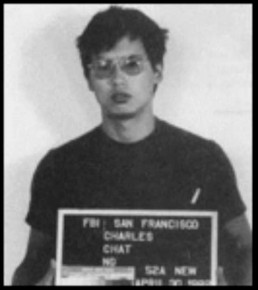
Serial Killer Charles NG

Charles Ng is one of California’s most notorious serial killers. After being thrown out of the Marines for theft, Ng partnered with Leonard Lake in an extended plot of kidnap, rape, torture and murder. The crimes took place at Lake’s remote cabin in Calaveras County. The crimes came to light in 1985. Investigators later recovered the bodies of seven men, three women, two baby boys, and 45 pounds of bone fragments from the site. Investigators also found, in a bunker, a large cache of weapons and videotapes that Ng had made of some of the murders.


Lake committed suicide as police closed in. Ng fled to Canada but was extradited and convicted in 1999 of multiple counts of murder.


On November 6, please vote no on Prop 34 if you live in California.

Michelle Le Murder Trial: Nowhere to Hide

Another juror has been dismissed in the Michelle Le murder trial. There are now six men and six women sitting in judgment of murder suspect Giselle Esteban. There are also two alternate jurors just in case. Eight times a day, at the beginning of the session, during breaks and at the end of the day, the defendant stands up and faces the jury as they pass within inches of her every time that they enter and leave the courtroom.


In the beginning some of the jurors glanced in her direction. In a few cases they would make eye contact with the defendant or even nod in her direction. However, as the evidence mounts against her, I detect a perceptible change in jury demeanor. Now they avoid the defendants gaze as they grimly pursue the task of passing judgment. I understand their hesitance. After all, who wants to stare into the vacant eyes of an empty soul?


All four of the witnesses who testified today are employees of the Hayward Police Department. Another Inspector, a crime analyst, and a crime scene evidence collection expert all testified to the methodology behind the evidence, the chain of custody, and the linkage between individual elements. By the time they were done we knew where and when Michelle died, whose vehicle was used to dispose of her body, and the route that was travelled by that vehicle. We knew that the defendant was obsessive and jealous beyond reason. As the details of an ill-conceived murder plot were laid out for all to see, we finally understood that as surely as the sun rises in the morning and sets at night, that time was rapidly running out for Michelle Le.


As the evidence mounts against her Giselle Esteban’s emotional state in the months leading up to Michelle’s murder is becoming clear. She believed that everything wrong with her life could be attributed to Michelle. If Michelle was out of the picture then Scott (Marasigan) would love her, they would be a family and raise their daughter together, they would vacation in Cancun, and drape tinsel on their Christmas tree every year.


The only problem with that fantasy scenario is that Giselle Esteban is obsessive beyond reason. She was/is a stalker whose mind was muddled by dark visions that had no basis in reality. We know this because her trail of breadcrumbs is documented in photographs, text messages, video and audio recordings, cell phone records, cell tower analysis, and an inept effort to distort the truth in interviews and commentary.


It’s not a coincidence that often times the only person sitting on her side of the courtroom is her father, who sits quietly as the truth about his bad seed is revealed in excruciating detail.

Michelle Le Murder Trial: No Laughing Matter

Witnessing a trial from a courtroom gallery is very different from watching a trial on television or in the movies. There is no DVR, so you don’t get the benefit of playback. You experience moments of numbing boredom, and particularly after lunch it can be a struggle to simply stay awake. It can be difficult to hear questions and answers if you are sitting in the gallery.


The prosecutors and the defense attorney are no more than a few yards away, but neither is miked, and they are addressing their attention, commentary and questions toward the witness, jury and judge. Therefore, you don’t see or hear everything. If a tape recording is being played and introduced into evidence, as it was during this afternoon’s session of the Michelle Le murder trial, the judge, jury and witness all read from transcripts, but those of us in the gallery only hear the white noise of a cheap audio recording interspersed with semi-intelligible dialogue. So, any opinions arrived at or judgments made depend upon other types of impressions.


I arrived in court late today, during the testimony of Lead Investigator, Hayward PD Inspector Fraser Ritchie. Prosecutor Butch Ford and Inspector Ritchie were setting the stage for the initial interview the Inspector conducted with defendant Giselle Esteban just before midnight on May 28, 2011 the day after Michelle Le disappeared. After transcripts were distributed Mr. Ford pushed the play button.


Due to the challenging acoustics of the courtroom the words on the recording were largely garbled. However, the tone of the conversation chimed through as clear as a bell. Ms. Esteban was conversational and nonchalant in her responses to Inspector Ritchie’s questions. Her voice was atonal, flat and emotionless: broken by occasional bursts of inappropriate laughter.


Taken out of context Giselle Esteban’s laughter is simply an unmelodious expression of mirth. However, in the context of a murder trial in which both sides acknowledge that the defendant killed Michelle Le, her laughter is a chilling indictment of an empty soul: void of empathy, sorrow, or remorse. Her evil cackle provides a rare window into the festering cesspool of lies, resentment and pure evil that is the mind of Giselle Esteban.


Amazingly, she not only placed herself at the scene of the crime on the evening that Michelle disappeared, she admitted that the two of them had a conversation, making her the last person known to see Michelle alive. Although she is not a card carrying member of Kaiser, she supposedly went to the hospital to inquire about pre-natal care. That doesn’t even make sense.


As the tape played, the defendant sat at the defense table staring straight ahead. This woman must have ice water coursing through her veins. Maybe that’s why they call it cold blooded murder. Occasionally, she would grab a pen and write furiously on the legal pad in front of her. As the damning conversation reverberated through the courtroom I could only wonder what she was writing. When Inspector Ritchie said, “If she’s dead all fingers are pointed in your direction,” did Giselle scribble “Awkward”? After the Inspector told her that other witnesses in the investigation had told police that she and Le had a tumultuous relationship, did Giselle write “Wait until I get my hands on those bastards”!


After the tape concluded Inspector Ritchie described the state of Michelle’s car when it was located the day after she disappeared. I have tried not to think about the crime as the trial approached, but it all became too clear to ignore. There was blood everywhere. I believe that Giselle laid in wait for Michelle Le in the Kaiser Hospital parking structure on Friday evening May 27, 2011. At around 7:00 p.m. Michelle visited her car, was attacked from behind, and stabbed to death by Giselle Esteban.


I don’t see what’s so God damned funny.


Where is Jessica Ridgeway?

Jessica Ridgeway

Just like Sierra LaMar, Jessica Ridgeway disappeared while walking a well-worn route to school. Just like Sierra LaMar, Jessica’s book bag was located two days later. Just like Sierra LaMar, her mother didn’t receive that notification that Jessica hadn’t attended school until late afternoon. In both cases the initial community response was overwhelming. Just like Sierra LaMar, Jessica Ridgeway remains missing.


But there are differences too. Sierra is 15-years-old and Jessica Ridgeway is 10. Sierra was walking to the school bus stop while Jessica was walking to meet friends who would then walk with her to school. Sierra carried a Juicy Couture Bag and Jessica had a child’s backpack. Sierra’s school didn’t notify her family that she wasn’t in school until about 6:00 p.m., but Jessica’s school tried and failed to notify her mother as early as 10:00 a.m. Sierra LaMar has been missing for more than six months while Jessica has only been missing for five days.

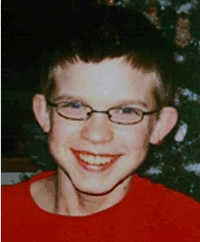
Leiby Kletzky

These cases aren’t aberrations. Children disappearing en-route to school or at school bus stops is too common. Just last week another 10-year-old girl disappeared after leaving school. Fortunately, she has been found safe. Last year, in Brooklyn, NY 8-year-old Leiby Kletzky was murdered and dismembered after he disappeared walking home alone after school. 7-year-old Orange Park, FL second grader Somer Thompson was kidnapped walking home alone home from school on October 19, 2009. Her remains were found in a landfill several days later. In January, 2007 13-year-old Ben Ownby vanished after getting off of the school bus in rural Missouri. He had been kidnapped by a predator, but was found alive four days later. On November 29, 2005 12-year-old Amber Harris disappeared without a trace after getting off of her school bus in Omaha, NE. Her remains were found many months later. Finally, in the most famous case of all 6-year-old Etan Patz never made it to school near his Manhattan, NY home on May 25, 1979. A suspect has only recently been arrested in that case. I could go on and on and on.

Somer Thompson

Without belaboring the point, on October 4, the day before Jessica vanished, a man driving a white van in nearby Arvada, CO was reported following and interfering with children walking home from school.

Ben Ownby

The incident was reported to the police and the school principal warned the parents of kids under her care via a robo-call. Two weeks previously, also in Arvada, a man in a blue sedan tried to lure children into his car by offering them candy. Neither of these individuals has been identified or questioned regarding Jessica Ridgeway’s case.

Amber Harris

Perverts who live on or near the walking routes or school bus stops know which kids to expect and when to expect them. That creates vulnerability. However, we can minimize school route vulnerability by following a few simple steps. Parents should always show their children the safest routes to and from school. They should always be with at least one other person, an adult if possible. There should be surveillance at school bus stops. This can be addressed in a number of ways. It could be a neighborhood watch program, or something as simple as parents sharing the duty to see their kids leave on the school bus in the morning and return in the afternoon. It could also be a church project. Finally, the unblinking eye of a surveillance camera tells no lies.

Etan Patz

The investigation for the gap-toothed girl in the pink and purple glasses hit stride quickly. The authorities issued an Amber Alert despite the fact that they have no vehicle information. Volunteer ground searches were initiated early on. A multi-jurisdictional task force of local, state and federal law enforcement agencies has conducted roadblocks, neighborhood canvas, and a team of search and rescue divers have already searched a local lake, all to no avail. Her school notified the family that she didn’t arrive at school in a timely manner. Unfortunately, her mother, who works nights and was asleep, missed that call.


Sierra LaMar

Will this be enough to bring little Jessica home safely? I certainly hope so, but am unwilling to make a prediction. If her family cooperates with law enforcement and the media, and if the recovered backpack reveals any evidence there is always hope. These are the factors that led to the arrest in Sierra LaMar’s case. Unfortunately, although Sierra has not yet been recovered, the suspect has been charged with kidnapping and murder.